Genealogy And U.S. Immigration Records

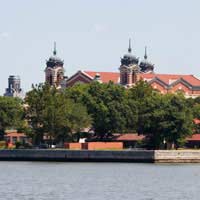
America is a land of immigrants. According to historians, even the Native Americans first arrived over the land bridge that originally connected Siberia and Alaska. African-Americans arrived on the slave ships and Europeans arrived mostly during the 19th and early 20th centuries. The Europeans came for many different reasons, but all came of their own volition and wanted the chance to build a better life in a new country. Tracing their arrival is a big step in establishing a major anchor point in your family history.
Obviously, for genealogy purposes it helps if you know when and where they arrived in the U.S. That narrows the parameters of your search, and there are plenty of U.S. immigration records you can research for your family history. But even if your information is very limited, you can still try and find the names you want on passenger lists.
Starting Your Genealogy Search In U.S. Immigration Records
During the 19th and early 20th centuries, five ports - New York, Boston, Baltimore, Philadelphia and New Orleans - handled most of the immigrant traffic, with New York by far the biggest. Of course, people arrived in any number of other places, but statistically these are your best bets when you begin looking for genealogy clues to your ancestry in U.S. immigration records. But what do you do if you have no idea where you ancestors landed? Some of them would have followed the same established routes as many others and you can use that logic to attempt to narrow your genealogy search. Many who settled along the Mississippi and the Missouri rivers for instance, came in via New Orleans and simply travelled up-river. Settlers in some of the Midwestern states just went directly overland from Baltimore. The Erie Canal was a conduit from New York to the northern states, whilst those in New England would almost certainly have arrived in Boston. It's not foolproof, but at least it offers a starting point for your research into your family history.U.S. Immigration Records At Ellis Island And Genealogy
More immigrants came through New York than any other port, and they have good U.S. immigration records, one of the most invaluable tools for anyone involved in genealogy in the U.S. But if your ancestors arrived in New York after 1892, you should check the records at Ellis Island (whilst it was being constructed, a barge was used for processing immigrants; during 1891, the year the barge was in use, some 405,000 immigrants, about 80% of the U.S. total, were processed there). Ellis Island records are free to access. In some cases, the names listed aren't the ones people had when they left home. There are misspellings and sometimes they were Anglicised, so a person arrived with a new identity. In its first five years, Ellis Island processed 1.5 million immigrants. A total of 17 million people passed through Ellis Island before it closed in 1954. You can access the records on the www.ellisisland.org website.For anyone researching family history in the U.S. it's a vital stop.
Other Genealogy Sources Among U.S. Immigration Records
There are a number of commercial genealogy sites that offer access to passenger lists from several ports. Ancestry.com has many from the main five, plus San Francisco, as well as other, smaller ports. Additionally, they offer some naturalisation records, although in every case, you'll need to pay.Genealogy.com claims to be able to give you online access to "22 million records from more than 25 different databases," a very impressive figure. Their records include information on immigrants from several European countries and Russia, along with passenger indexes from 1820-1850 for the five main ports. Again, it requires payment.
Another excellent source are the Filby books, also know as the Passenger and Immigration Lists Index, or PILI. Many libraries have them, or they're available on CD-Rom (or by subscription to Ancestry.com). In them you can find indexes of passenger arrivals and naturalisation.
For anyone interested in genealogy and family history, there's plenty to go at in U.S. immigration records once you know where to look.
- Employing a Foreign Genealogist
- Ancestors in Other British Colonies
- American and Nordic Roots
- The Clearance and Scottish Emigration
- The Irish Potato Famine and Emigration
- Transportation Before Australia
- The Importance of Ellis Island in American Immigration
- Canadian Genealogy Sources
- Using the US Registry of War Ration Books
- Using Voters' Records for Tracing US Relatives
- Genealogy in the Isle of Man and Channel Islands
- What If You Have Asian Roots?
- Jewish Genealogy Sources
- Genealogy And Land Records In Ireland
- Scotland Poor Law Records and Genealogy Research
- Scottish Births & Birth Certificates to Trace Ancestors
- Scottish Death Records and Family History Research
- Scottish Marriage and Family History Research
- Using Archived Scottish Wills To Trace Ancestors
- Genealogy Resources In Australia And New Zealand
- How To Use And Find Native American Genealogy Records
- U.S. Land Records
- Using U.S. African-American Records To Trace Ancestors Abroad
- Australian Census to Trace Family History
- Ireland Vital Records
- Irish Census Records
- Irish Emigration Records And Genealogy
- New Zealand Maori Records
- The Importance of Wills In Irish Genealogy
- The Use Of U.S. Birth, Marriages And Death Certificates In Genealogy
- Using Australian Aboriginal Records to Trace Your Family History
- Using U.S. Military Records to Trace Ancestors Abroad
- Australian Military Records and Family History
- Australian Vital Records
- New Zealand Military Records
- New Zealand Birth Records
- New Zealand Death Records
- New Zealand Marriage Records
- New Zealand Vessel Arrival Information to Trace Ancestors
- Researching Australia Immigrant Records for Family History
- Other Useful Genealogy Records In Australia
- Searching for an Australian Will to Research Your Family History
- US Census Records And Genealogy
- Using The Electoral Rolls For Genealogy Research In New Zealand
- European Resources
- Using Canadian Genealogy Sources
- Using U.S. Resources To Trace Ancestors Abroad
- The International Genealogical Index and Your Family Tree Research

Re: Using Criminal Records For Family History Research
Trying to find dads past history with arrests just out of interest as hes recently passed away and…
Re: Using Criminal Records For Family History Research
Hi all i wanted to find out about my dad's past and nobody seems to know much about it or what he did.…
Re: Maiden Names in Genealogy
Looking for my fathers mother maiden name
Re: Genealogy and a Criminal Past
I am trying to find out about my father crime in 1992 or 1993 my father as pass away 1998 and I would like to find out why he got…
Re: Using Criminal Records For Family History Research
I am trying to find my biological father's police criminal record as I was abused as a child but have…
Re: Cremation Records and Tracing Your Family History
I am trying to find out where has my friends aunt Adelinda Diaz McMullen was cremated and who was her…
Re: Cremation Records and Tracing Your Family History
CAN SOMEONE PLEASE HELP ME WITH TRYING TO FIND OUT WHERE MY FATHER WAS CREMATED/BURIED IN KENT UK. I…
Re: What If You Have Asian Roots?
Ancestor Edward Albert Wells was born in Trichinopoly on 8 May 1833 to his father George Wells of the 54th Regiment at Foot and…
Re: How to Use Church Marriage Records to Trace Your Ancestors
It is still legal for first cousins to marry.
Re: Cremation Records and Tracing Your Family History
My sister finance was cremation and she stayed up by his bedside at Augusta university for days on out…