Tracing Family History On The Female Side

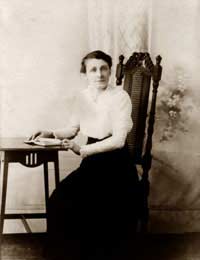
Finding the branches of a female family tree can be much more of a genealogy challenge than following the male line. It means going back on the maternal side from your mother to her mother, then her mother, and so on, so you're really dodging back through many family trees, swinging from one to the next. As you go farther back through the generations, you'll find that due to social convention, the genealogy search becomes harder and harder to find.
The Role of Women In Family History
These days we're used to women largely being equals in society, but that's only a fairly recent development. To investigate the female side of your family history it's important to know at least a little about the rights women have had during the ages, especially when it came to being able to sign documents and own property. It used to be that a woman had no control over any property she brought into a marriage (indeed, to a large extent she was property, with very few rights). Even when her husband died, she received only a fraction of the estate.Why Finding Maiden Names Is Important In Genealogy
Obviously, the way to trace a female lineage is through maiden names. But since many certificates of birth and marriage don't list a maiden name, especially when you've gone back a few generations of your maternal ancestors, you need to be a bit more imaginative in your genealogy search. Family heirlooms, where they exist, can be the best answer. You can find maiden names in old letters, diaries, family Bibles, on wedding invitations and written on the back of old photographs - even on old needlework samplers. These can supplement standard genealogy research through birth and marriage certificates. It's worth remembering that many women reverted to using a maiden name on divorce.Obituaries of a female ancestor can also offer clues. Even if her parents aren't mentioned, a brother might be, so you can deduce her maiden name and continue on the trail - making the most of small clues is vital in genealogy.
One Useful Tool In A Genealogy Search
Not many work options were open to middle class Victorian women. Some would become governesses, others (usually down on their luck) paid companions to another lady. But they could become teachers, especially after schooling of children became more widespread. Out of that came the School Teachers (Superannuation) Act, passed in 1918, and the form "To Be Used For A WOMAN Only." This gives the woman's teaching history, her number if a certified teacher, the dates and locations of the schools where she taught, and her maiden name. If your ancestor was a teacher during this period, finding this can give a boost to your family history research.Genealogy And Female Ancestors In Scotland
Unlike England and Wales, in Scotland women used to keep their maiden names for legal purposes. So you'll find them in wills and testaments, parish registers, and even on gravestones. It's even possible to find a woman's maiden name listed in some of the early census returns, which can be a genealogy boon, and a quick way to fill in gaps on the maternal family tree.Genealogy Information Pre-1538
You're really only going to have success in a genealogy search in the time before parish registers if your female ancestor came from an aristocratic family. There heraldry can be your friend. On marriage a woman would have her family crest incorporated into that of her husband. From that you can discover her family. But as you'll discover, tracing the female line can be a tortuous, often frustrating exercise in genealogy, and a sharp lesson in the rights of women through the ages.However, if you can complete a family tree in the female line, it's one of the most satisfying tasks a genealogist can undertake.
- Genealogy and a Criminal Past
- How to Deal With Conflicting Dates in Genealogy.
- Tracing the Female Line in your Ancestry
- How to Use Obituaries for Study
- Taking a Genealogy Course
- What's at the National Archive?
- Using the International Genealogical Index
- Using Local Libraries as Sources
- How Do You Know When You've Really Hit a Dead End?
- The Increase in Online Genealogical Resources
- Researching British Genealogy from Abroad
- The Importance of the 1911 Census
- Do You Need a Professional Genealogist?
- Latin In Church and Legal Records
- The Family Bible In Genealogy
- Genealogy And Military Records
- How To Find And Use Medieval Genealogy Information
- The Importance of the Protestation in Genealogy
- Checking Taxation Records for Family History Research
- Sharing The Results Of Your Genealogy Research
- Using Criminal Records For Family History Research
- How Museum Collections Can Help You In Genealogy
- Poor Law Records and Tracing Your Family Tree
- Surname Variations When Tracing Your Family Tree
- Tracing Ancestors Transported to the Colonies as Criminals
- Using Geographical Maps to Trace Family History
- Using The Internet to Trace Your Ancestors
- Utilising Local History To Research Your Family Tree
- Genealogy and Medical Records

Re: Using Criminal Records For Family History Research
Hi all i wanted to find out about my dad's past and nobody seems to know much about it or what he did.…
Re: Maiden Names in Genealogy
Looking for my fathers mother maiden name
Re: Genealogy and a Criminal Past
I am trying to find out about my father crime in 1992 or 1993 my father as pass away 1998 and I would like to find out why he got…
Re: Using Criminal Records For Family History Research
I am trying to find my biological father's police criminal record as I was abused as a child but have…
Re: Cremation Records and Tracing Your Family History
I am trying to find out where has my friends aunt Adelinda Diaz McMullen was cremated and who was her…
Re: Cremation Records and Tracing Your Family History
CAN SOMEONE PLEASE HELP ME WITH TRYING TO FIND OUT WHERE MY FATHER WAS CREMATED/BURIED IN KENT UK. I…
Re: What If You Have Asian Roots?
Ancestor Edward Albert Wells was born in Trichinopoly on 8 May 1833 to his father George Wells of the 54th Regiment at Foot and…
Re: How to Use Church Marriage Records to Trace Your Ancestors
It is still legal for first cousins to marry.
Re: Cremation Records and Tracing Your Family History
My sister finance was cremation and she stayed up by his bedside at Augusta university for days on out…
Re: Cremation Records and Tracing Your Family History
I am trying to find out where my partners mother was cremated. Patricia Florence Bennett. Cremated…