Organising Your Family History Data

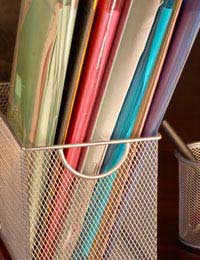
In family history, as in life, the more organised you are, the smoother things will flow. The box file stuffed with notes will work, but soon you're going to find yourself digging through it regularly for information. The quicker you can lay your hands on something you need, the less frustrated you'll become when you're putting together your family tree - and there will be times when you'll need one particular piece of information to confirm a connection with something else among your ancestors. In genealogy, organisation is vital. The best way is to implement a system.
Make Working Copies of Your Family Tree
You need working copies of your family tree to carry with you. When you're researching family history, it's going to be impossible to carry everything, so something simple and very portable keeps you on track. Update both original and working copies of the family tree every time you research.Keep a file on each family unit. This way you can group the information about them together. It should not only have the completed family group sheet, but whatever other information you can find during your genealogy search, such as birth, marriage and death certificates, census returns and military records - anything that's pertinent to the family history. For ease, don't just identify the file by the surnames of the pair, but also by the numbers of the ahnentafel chart (for example, Robert HINCHCLIFFE/ Mary WILSON 8/9). Filing them by number rather than name can often prove to be much easier.
Where you have irreplaceable items of family history, such as old letters or documents, invest in a fireproof box and store them there, keeping photocopies in your files.
Logging Family Tree Communications and Contacts
Like any detective, there's a lot of legwork involved in tracing a family tree. You'll contact plenty of people during a genealogy search, whether it's by phone, e-mail or letter. The simplest way to keep track of all that is with a contact log. It lets you know at a glance who you've contacted (add a column to briefly list the subject), whether you've had a response, and what the result was. Whilst this can be as simple as a page in a notebook, it's best to give the log its own file for quick, easy access.The Relatives You Don't Know About and the Family Tree
In the beginning there's going to be far more that you don't know about your family history than you do know. As time passes and your investigations continue, that situation will gradually change. Along the way you'll glean bits and pieces of information - for instance, you might discover your great-great-grandfather was called Robert Hinchcliffe and came from Wombwell. However, what you have is scanty knowledge of that ancestor. Write out a sheet stating exactly what you do know, and where will be the good sources to find more. As you think of other ways to find what you need (and as you become more experienced you'll learn about ways beyond the obvious), add them to the paper to be explored later. Also note what you've already tried, just to save going over old ground. Carry these papers with you (in a loose-leaf folder)on each genealogy search, and check through them before you go.A Family History to Do List
Before you undertake any family history research trip, be it to a library, parish church or wherever, go through your folder. There might be several questions about your ancestry you can answer at the same place - when was Robert Hinchcliffe married, for example, and was his son baptised at the same church? Was his wife from the same village? Writing up a list of all the family tree to check at one place beforehand can make a single genealogy search very fruitful - and save you having to return a few weeks later.Using Computers for Family History
Whatever computer programme you choose to use to assemble your family tree and family history (assuming you use one at all), you're still going to acquire plenty of paper. Short of taking a laptop every time you research, most of your material will be on paper (and if you do everything on computer, back it up immediately onto CD or portable hard drive, in case of a crash). Transcribe your notes after each genealogy research session, by all means, but don't discard the originals. Keep them in the appropriate files in case you need to consult them later. You might feel like a pack rat, but when the time comes that you need to corroborate a particular fact about an ancestor, you'll be grateful. Genealogy is one area where going paperless isn't a plus.Devise Your Own Family History System
What's listed above is a system used by many genealogists for keeping track of information - what they know and what they don't know. However, it's not necessarily a one-size-fits-all idea. Develop a system that works for you and that you find easy to use - you'll be working with it a lot over the next few years.- The Importance of Wills in Genealogy
- Family History: How Far Back Can You Go?
- How Record Keeping Changed in the 19th Century
- How to Make Use of Genealogy Reference Books
- What Genealogy Qualifications Can You Obtain?
- Becoming a Professional Genealogist
- Why Does Family History Fascinate Us?
- How to Make a Family Tree
- DNA Testing and Genealogy
- Family History: What Do You Want To Learn?
- Genealogy Problems You May Enounter In Your Family History Search
- Preparing To Trace Your Family Tree
- Where To Begin In Researching Family History

Re: Using Criminal Records For Family History Research
Hi all i wanted to find out about my dad's past and nobody seems to know much about it or what he did.…
Re: Maiden Names in Genealogy
Looking for my fathers mother maiden name
Re: Genealogy and a Criminal Past
I am trying to find out about my father crime in 1992 or 1993 my father as pass away 1998 and I would like to find out why he got…
Re: Using Criminal Records For Family History Research
I am trying to find my biological father's police criminal record as I was abused as a child but have…
Re: Cremation Records and Tracing Your Family History
I am trying to find out where has my friends aunt Adelinda Diaz McMullen was cremated and who was her…
Re: Cremation Records and Tracing Your Family History
CAN SOMEONE PLEASE HELP ME WITH TRYING TO FIND OUT WHERE MY FATHER WAS CREMATED/BURIED IN KENT UK. I…
Re: What If You Have Asian Roots?
Ancestor Edward Albert Wells was born in Trichinopoly on 8 May 1833 to his father George Wells of the 54th Regiment at Foot and…
Re: How to Use Church Marriage Records to Trace Your Ancestors
It is still legal for first cousins to marry.
Re: Cremation Records and Tracing Your Family History
My sister finance was cremation and she stayed up by his bedside at Augusta university for days on out…
Re: Cremation Records and Tracing Your Family History
I am trying to find out where my partners mother was cremated. Patricia Florence Bennett. Cremated…